
Where Robby started
Robby was not a beginner. 3 years as a data analyst at a SaaS company, the technical skills already in place, and he knew which ones the market wanted.
He was getting a 1 to 2 percent response rate.
Read that again, because it is the most useful number on this page. A working data analyst with 3 years of experience, applying on his own, was being ignored by 98 percent of the companies he contacted. If you are earlier in your journey and your applications are going nowhere, this is your evidence that the problem is not your resume gap or your missing certificate. The channel itself is broken.
He searched that way for roughly 6 months.
“Even with experience in the data field, I realized the need for mentorship and community.”
He looked at a new degree and at bootcamps costing thousands and ruled both out. What made Data In Motion different, in his reading, was that everything pointed at one outcome: interview prep, stakeholder presentation, communication, and portfolios built for the job rather than for a syllabus.
What we did together
His technical skills were not the constraint. Everything we changed was on the side of the process where he was losing.
- Rebuilt interview prep specifically for data analyst interviews, replacing the generic advice he had been pulling from YouTube and LinkedIn
- Coached the emphasis. Generic advice tells you to prove you are the best candidate. He was taught to lead with genuine interest and curiosity in the role instead, because with 2 minutes to answer a question, what you choose to emphasize is the entire answer
- Worked on branding, presentation, and communication, the parts of the job search his 3 years of technical work had never required him to develop
- Coached him live through the interview rounds as they happened rather than before them
- Put him in a community of peers running the same process, so the self doubt had somewhere to go
The result
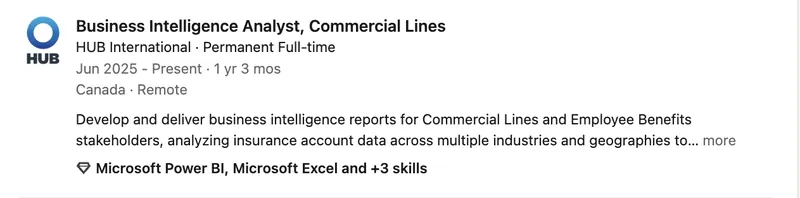
6 months of searching alone. He joined Data In Motion, and the offer came shortly after. He is now a data analyst at an insurance company.
He names the interview prep as the thing that moved it, and one detail in particular. Following generic advice, he had been optimizing every answer to prove he was the strongest candidate in the pool. Shifting that emphasis to genuine curiosity about the role changed his approach across every round that followed.
The mindset change is the part he volunteers without being asked. He came in treating mentorship and community as a nice addition to a job search he was already running. He left describing it as the thing that gets you past a 1 to 2 percent response rate.
“Having a group of peers and mentors to back you will never hurt your chances. It would only boost your chances.”
He also makes a point worth repeating on your behalf: this is not only for people starting out. It is for experienced professionals who are stuck, which is what he was.
Individual results vary. Outcomes depend on effort, prior experience, and market conditions. Not all students secure offers.